Peace Corps' regional recruiting director shares how to become a Peace Corps Response volunteer and how Rotary International and Peace Corps share similar missions – peace and understanding through service and exchange of cultural knowledge.
Our new 2025-26 Club President Cindy Dooling called her first meeting to order after the delayed start because of some technical difficulties with the fire training center’s computer system. Club members were unfazed and spent extended time catching with each other.
Joining us in attendance was visitor Michael Ottman, a recently retired faculty member from the University of Arizona.
After the Pledge of Allegiance and quick introductions, we went directly to our guest speaker’s presentation from Anastasia Bannikova, a regional director of recruitment for the Peace Corps.
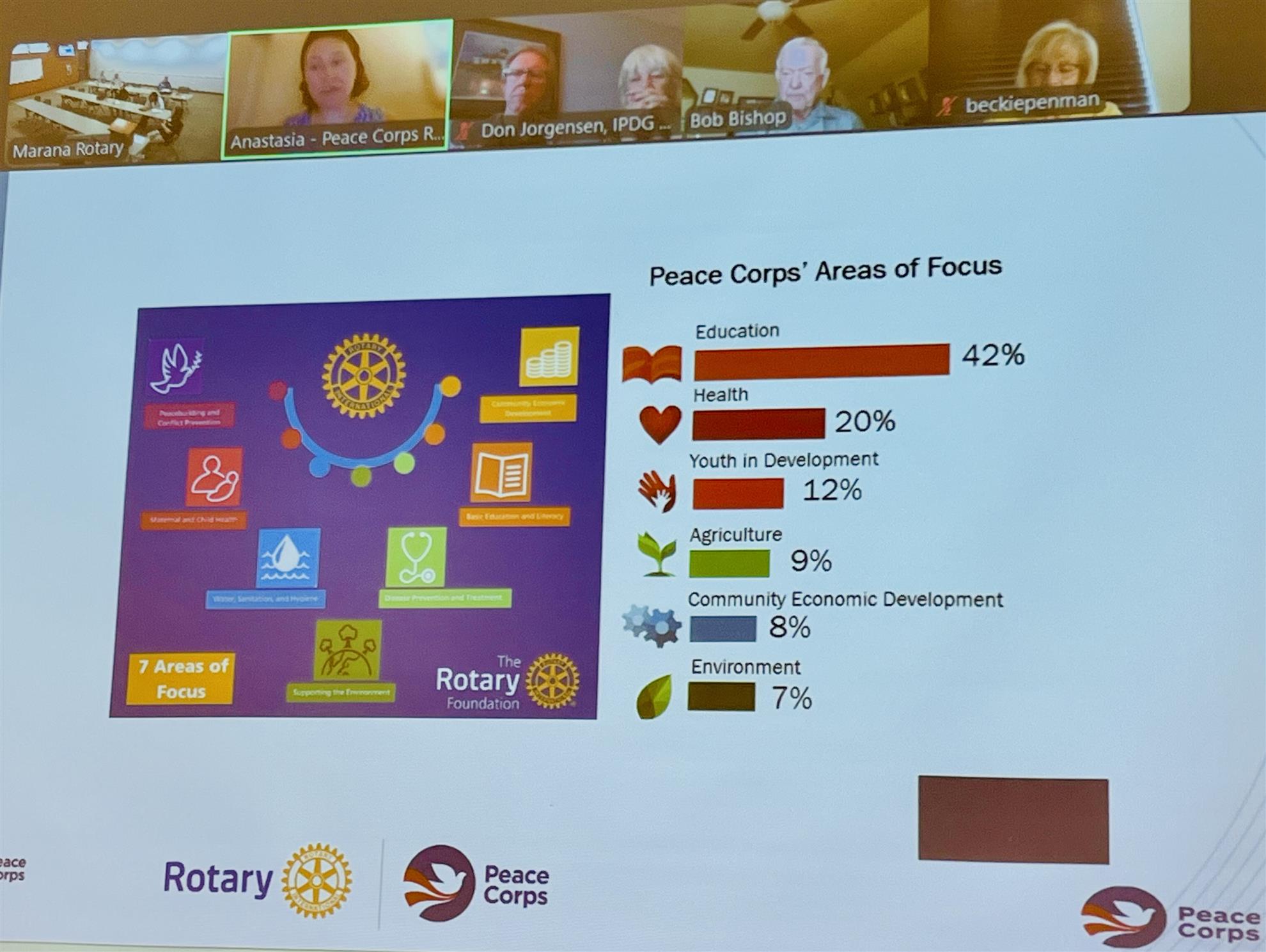
Anastasia is the senior regional recruiter for Peace Corps. She served as a Peace Corps volunteer in Ghana, Ukraine, and Armenia. An immigrant from Kazakhstan, Anastasia has a great appreciation for the importance of cultural and knowledge exchange in promoting peace. In this way, Peace Corps and Rotary International have similar goals by using service projects and assignments to spread world peace and friendship through across the globe. Rotary and Peace Corps have a Memorandum of Understanding and similar sectors of service.
Anastasia reviewed some of the requirements to become a Peace Corps volunteer and noted some additional ways to volunteer. We typically think of the two-year commitment that is required, but a new way to volunteer is through Peace Corps Response, which is a 6-12 month assignment for experienced professionals with diverse skill sets. To qualify, volunteers must be 18 years of age, have bachelor’s degree, or five years’ experience or an associate’s degree and three years of experience. Patience and flexibility are key attributes as well.
Volunteers can choose where to serve where Peace Corps has a presence. Benefits include a living stipend, housing and travel, and Peace Corps place a premium on volunteer safety. As of now, Peace Corps funding is budgeted in Congress’s current appropriations bill, Anastasia said.
Anastasia then summarized the community work and projects she did while in Ghana, Ukraine and Armenia. For more information about Peace Corps volunteer opportunities, contact Anastasia at abannikova@peacecorps.gov .
We concluded the meeting with Rotary’s Four-Way Test.
– Submitted by Laura Clymer